

The landscape of content creation has fundamentally transformed. With 71% of organizations now using generative AI for content creation, we’ve reached an inflection point where artificial intelligence has moved from experimental technology to essential infrastructure. But here’s the paradox: while AI adoption has exploded, 52% of consumers reduce engagement when they suspect AI-generated content.
Welcome to 2026, where success in content creation requires mastering both cutting-edge AI tools and timeless human authenticity.
The State of AI Content Creation in 2026
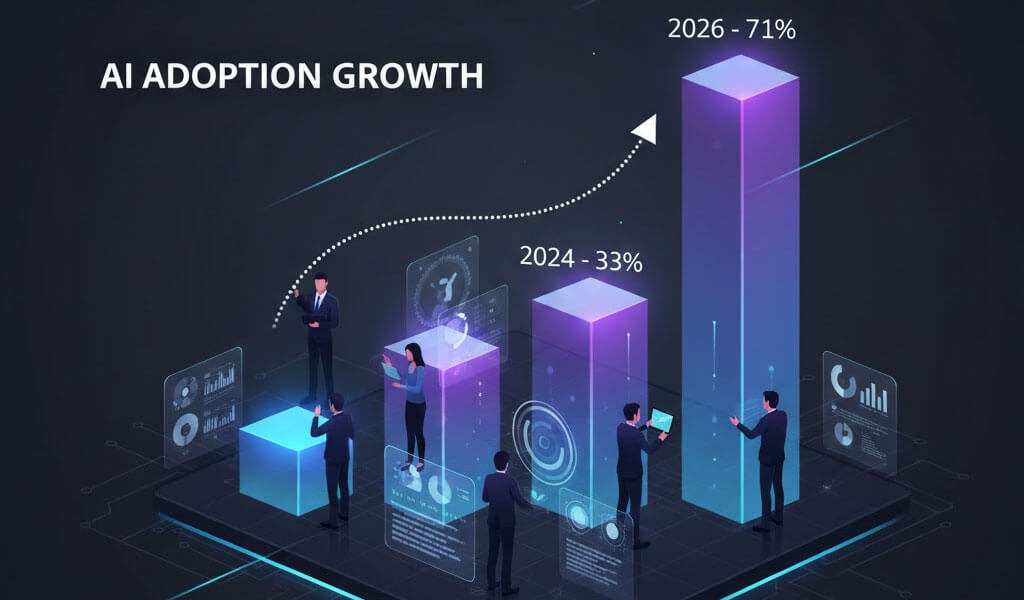
The numbers tell a compelling story. Generative AI adoption more than doubled in one year, rising from 33% in 2023 to 71% in 2024, making it one of the fastest technology adoption rates in business history. But rapid adoption doesn’t equal simple implementation.
The Efficiency Revolution
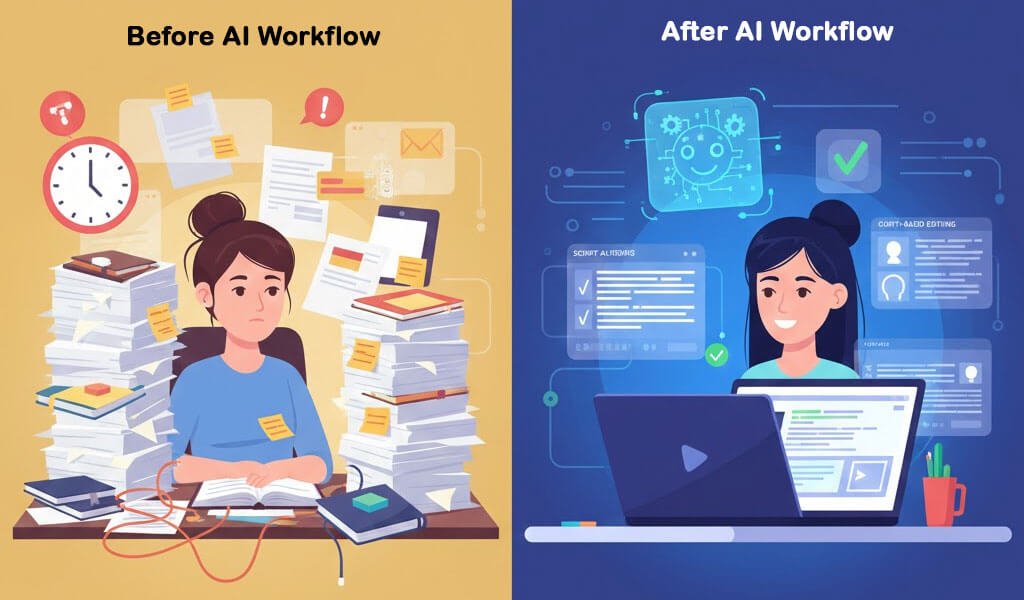
Content teams are experiencing unprecedented productivity gains. Employees report average productivity boosts of 40% and marketers save 3 hours per piece of content. For full-time workers, this translates to saving 2.2 hours weekly—time that can be redirected toward strategy, creativity, and human connection.
The Trust Challenge
However, beneath these impressive efficiency metrics lies a critical challenge. 59.9% of consumers now doubt the authenticity of online content, creating what experts call the “AI content paradox.” Brands can produce more content than ever, but audiences are increasingly skeptical of what they consume.
Perhaps most telling is this perception gap: while 77% of marketers and 78% of creators believe AI effectively crafts emotionally resonant content, only 33% of consumers agree. This 44-percentage-point disconnect reveals a fundamental misalignment between creator confidence and audience reception.
4 Game-Changing Trends Shaping AI Content Creation
1. Hyper-Personalization at Scale
Mass communication is officially dead. Modern audiences expect experiences tailored specifically to them, and AI makes this possible across millions of users simultaneously.
Think about how Netflix doesn’t show everyone the same homepage or how Spotify curates Discover Weekly playlists based on individual listening habits. This same principle now applies to content marketing, where AI analyzes user data including browsing history, past purchases, and location to deliver precisely relevant content.
The business impact:
- More engagement as users spend longer on personally relevant pages
- Higher conversion rates through personalized calls-to-action
- Stronger customer loyalty built on consistently valuable experiences
2. Full-Stack AI Content Creation
Early AI writing tools only handled one part of the job—generating a rough draft. This left creators stuck with extensive post-work: fact-checking, finding visuals, formatting for CMS platforms, adding links, and handling SEO optimization.
The breakthrough in 2026 is full-stack AI platforms that handle the entire content process from research and drafting to asset creation, formatting, and search optimization. These systems function more like teammates than simple text generators.
What this means for your workflow: Instead of juggling multiple disconnected tools, modern AI platforms enable you to create complete, publication-ready content in single integrated workflows. You maintain creative control while dramatically reducing repetitive busywork.
3. The Human-in-the-Loop Model
Despite AI’s impressive capabilities, the most successful content strategies embrace what experts call the “human-in-the-loop” model. AI generates the foundation—complete posts, optimized formatting, and supporting assets—but humans make the final decisions.
This approach ensures:
- Accuracy through human fact-checking
- Authenticity through personal voice and perspective
- Alignment with brand values and audience needs
- Quality control that AI alone cannot guarantee
The entire workflow is designed around this principle: AI generates, humans review and refine, then publish. You stay in control, ensuring the final product genuinely serves your audience.
4. Answer Engine Optimization (AEO) Replaces Traditional SEO
For years, content marketing focused on Search Engine Optimization—ranking high on Google search results pages. While SEO remains important, how people find information is fundamentally changing.
Gartner predicts that traditional search engine volume will drop 25% by 2026 as users increasingly get direct answers from AI-powered search features like Google’s AI Overviews, ChatGPT, and Perplexity without clicking links.
This shift demands Answer Engine Optimization—creating content that AI search tools can cite and reference when answering user questions. Your content needs to be structured, authoritative, and comprehensive enough that AI systems recognize it as a reliable source.
The Human Content Advantage: Your Competitive Edge

Here’s the counterintuitive reality: as AI-generated content floods digital channels, human-created content becomes more valuable, not less.
AI-generated drivel is flooding digital channels, creating an opportunity for brands to share authentic experiences and genuine expertise. Being human is now your number one asset in content creation.
What Makes Human Content Irreplaceable
Original research and data: AI cannot conduct surveys, run experiments, or generate proprietary insights. Publishing your own research delivers multiple benefits—earning backlinks, media mentions, social engagement, and positioning your brand as an industry authority.
You don’t need massive studies with thousands of participants. Even modest customer surveys, case study analyses, or industry observations provide original value that AI simply cannot replicate.
Personal experience and perspective: AI lacks lived experience. It cannot share the lessons learned from failure, the nuance of in-person interactions, or the unexpected insights that emerge from deep domain expertise.
Authentic storytelling: Audiences increasingly crave real human connection. They trust people more than faceless brands, and they especially trust employees more than influencers or executives. Content that features real team members, shares genuine challenges, and celebrates authentic victories creates connections that AI-generated content cannot match.
Strategic Implementation: Making AI Work for Your Content
Start with Human-Centered Strategy
Before deploying any AI content tools, clarify your content strategy:
- Who are you creating for?
- What unique value do you provide?
- What goals are you trying to achieve?
AI amplifies strategy—it doesn’t replace it. Teams without clear direction produce more content faster, but it’s the wrong content delivered inefficiently.
Use AI for Workflow Acceleration, Not Creative Replacement
The most effective approach treats AI as a workflow accelerator:
Where AI excels:
- First draft generation for routine content
- Data analysis and insight identification
- Brainstorming and idea generation
- Creating multiple content variations for testing
- Automating repetitive tasks like reformatting
- Generating supporting visual assets
Where humans remain essential:
- Strategic decision-making
- Brand voice and tone refinement
- Quality control and fact-checking
- Original research and analysis
- Emotional resonance and storytelling
- Ethical considerations and sensitivity
Embrace Transparency
As consumers become more sophisticated at detecting AI content, transparency emerges as a competitive advantage. Being upfront about AI use builds trust rather than eroding it.
Consider labeling human-created content as such—it’s becoming a selling point that signals quality and authenticity. Conversely, if you use AI for certain content types, acknowledge it while emphasizing human oversight and verification.
Video Content: The Next AI Frontier

By 2026, AI-generated video is projected to account for 10% of all digital video content—a seismic shift that’s redefining video marketing and engagement.
Traditional video production is expensive, time-consuming, and resource-intensive. AI removes these barriers, allowing businesses to create professional-grade videos without large teams, expensive equipment, or weeks of post-production.
What’s now possible:
- Generating high-quality videos from text prompts
- Turning blog posts into engaging video summaries
- Repurposing existing content into dynamic visual formats
- Creating personalized video messages at scale
- Producing multilingual versions efficiently
One in ten of the fastest-growing YouTube channels globally now shows only AI-generated video content, demonstrating both the technology’s capability and the market demand for video at scale.
Creator Partnerships: The Rising Trend
While AI handles production efficiency, human creators deliver authenticity and trust. In 2026, investment in creator content will grow by 61%, with 85% of enterprise marketers planning to increase investment in creator marketing over the next four years.
Why Creator Content Works
90% of CMOs believe that social and influencer content drives more engagement than traditional advertising. Nano and micro creators particularly outperform larger influencers on engagement and trust metrics.
The winning approach:
- Long-term partnerships over one-off activations
- Integration across multiple channels (organic, paid, email, retail)
- Creator selection based on where they drive most value
- Clear brand guidelines paired with creative freedom
- Focus on authentic expression over overly polished content
Navigating the Multi-Channel Landscape
Success in 2026 requires diversification beyond search. As AI-generated answers reduce traditional search traffic, smart brands are investing in multiple discovery channels:
Email marketing: Direct communication channel you control, unaffected by algorithm changes
Social media: Platform diversity matters—experiment with LinkedIn for B2B, Instagram for visual storytelling, and emerging platforms for early-mover advantage
Community building: Create spaces (Discord servers, Slack communities, forums) where your audience gathers and engages directly
Newsletter strategies: Owned media that delivers value straight to subscribers
Podcast content: Audio creates intimate connection and builds authority
The goal isn’t abandoning search optimization—it’s ensuring you’re not solely dependent on it.
Practical Steps to Implement AI Content Creation
Month 1: Assessment and Planning
- Audit your current content creation process
- Identify bottlenecks and repetitive tasks
- Research AI tools that address your specific needs
- Define success metrics beyond just output volume
Month 2: Pilot and Learn
- Select 1-2 AI tools for testing
- Run small-scale pilots with specific content types
- Document what works and what doesn’t
- Train team members on effective AI prompting
Month 3: Scale and Refine
- Expand successful use cases
- Develop standard workflows that combine AI efficiency with human oversight
- Create quality control checklists
- Establish transparency guidelines for your audience
Ongoing: Measure and Adapt
- Track engagement metrics beyond just production speed
- Monitor audience feedback and sentiment
- Stay updated on AI capability improvements
- Continuously refine your human-AI collaboration model
The Skills That Matter in 2026

As AI handles more execution, human value shifts toward:
Strategic thinking: Understanding what content to create and why
AI literacy: Knowing how to effectively prompt, guide, and evaluate AI outputs
Authentic storytelling: Crafting narratives that resonate emotionally
Data interpretation: Turning analytics into actionable insights
Ethical judgment: Navigating questions of transparency, bias, and responsibility
Relationship building: Developing creator partnerships and community connections
Looking Ahead: The Content Marketing Paradox
We’re living through a fascinating paradox. AI makes content creation faster, cheaper, and more accessible than ever. Yet audiences increasingly value authentic, human-created content. Both realities are true simultaneously.
The winners in this new landscape won’t be those who choose AI over humans or humans over AI. They’ll be those who thoughtfully integrate both—using AI for efficiency and scale while preserving the irreplaceable human elements of creativity, experience, and authentic connection.
If 2024 was the year of adopting content generation with AI and 2025 was the year of adopting no-code AI agents, then 2026 is the year it all comes together. This integration doesn’t mean the technology plateau—it means we’re finally learning to wield these powerful tools effectively.
Key Takeaways
- AI adoption is universal but implementation varies widely—success requires strategy, not just tools
- The trust gap is real—consumers are skeptical of AI content, making human elements more valuable
- Full-stack AI platforms replace disconnected tools, streamlining entire workflows
- Answer Engine Optimization matters as much as traditional SEO in 2026
- Original research and authentic experiences are your competitive advantage
- Video content is being transformed by AI, making professional production accessible
- Creator partnerships deliver engagement and trust that branded content alone cannot
- Multi-channel strategies reduce dependency on search traffic alone
- Human-in-the-loop models combine AI efficiency with human judgment
- Transparency builds trust—be honest about your AI use
Conclusion: The Path Forward
AI content creation in 2026 isn’t about choosing between human creativity and machine efficiency. It’s about orchestrating both into workflows that produce better content faster while maintaining the authenticity audiences demand.
The brands that thrive will be those that view AI as a powerful assistant rather than a replacement—using it to handle routine tasks, generate variations, and accelerate production while reserving human judgment for strategy, creativity, and the irreplaceable elements of authentic connection.
The technology will continue evolving. New capabilities will emerge. But the fundamental truth remains: people connect with people. Your job isn’t to produce more content—it’s to create content that matters, content that serves your audience, content that builds trust and drives meaningful outcomes.
AI gives you the tools to do this at unprecedented scale. The question is: how will you use them?
Ready to transform your content strategy? Start by auditing one content workflow this week. Identify the repetitive tasks consuming your team’s time. Then research AI tools designed specifically for those challenges. Remember: implementation beats perfection. Small, strategic improvements compound into massive competitive advantages.
The future of content creation is already here—it’s just waiting for you to leverage it effectively.